What to Eat in Your Luteal Phase: Comforting Foods for the Week Before Your Period
Why cravings and hunger can rise before your period, and simple, satisfying meal ideas to help you feel steadier in the luteal phase.
For education, not medical advice. This article shares general wellness information and isn't a substitute for care from your doctor. Talk with a qualified healthcare provider before making changes to your diet, exercise, or supplements. Full disclaimer
In short
Why cravings and hunger can rise before your period, and simple, satisfying meal ideas to help you feel steadier in the luteal phase.
The week or so before your period can feel like a different season entirely. You might be hungrier, crave something sweet or salty, feel puffy, or simply want to curl up with a bowl of something warm.
None of that means you're doing anything wrong. Here's what's going on—and some gentle ways to eat that may help you feel more like yourself.
What is the luteal phase?
The luteal phase is the second half of your cycle: it starts right after ovulation and ends when your period begins. For many women it lasts around 12 to 14 days, though it varies. (New to the phases? Start with Cycle Syncing 101.)
Why you might feel hungrier
After ovulation, progesterone rises. Studies suggest that resting energy needs may increase modestly during the luteal phase, and many women report a bigger appetite and more cravings at this time. Falling estrogen and progesterone right before your period may also affect mood-related brain chemicals like serotonin.
The takeaway: a little extra hunger is a normal signal, not a lack of willpower.
Build a steadying plate
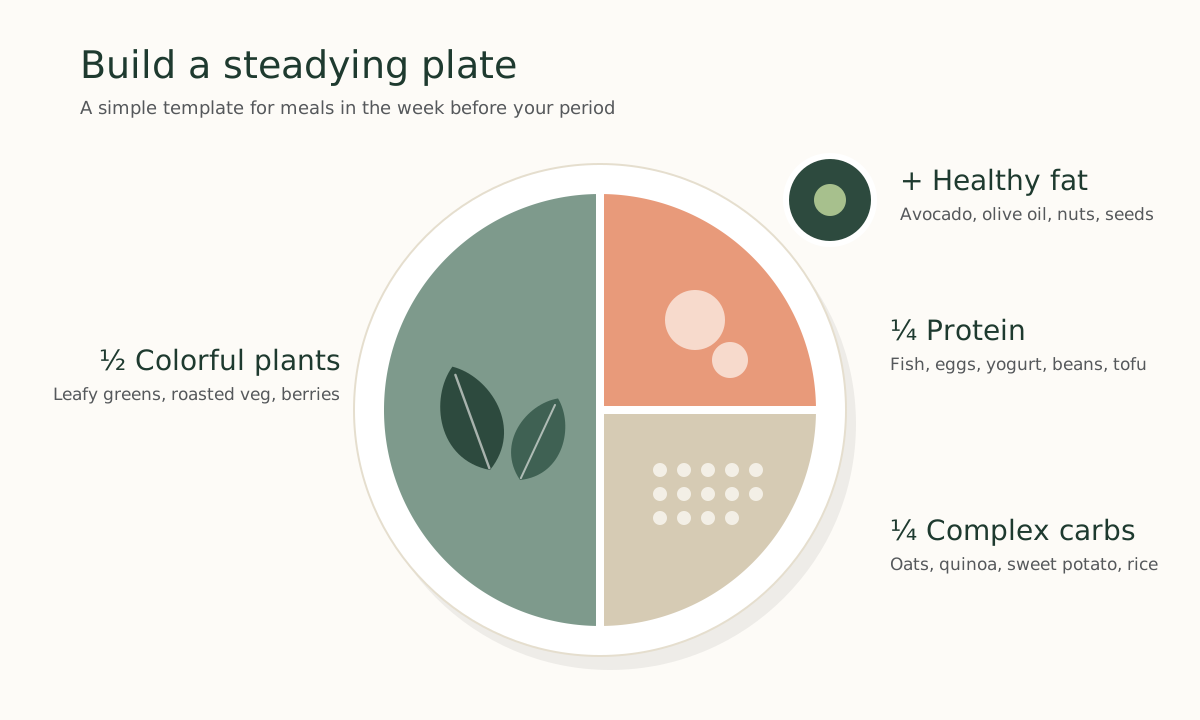
Aim to include these at most meals:
- Protein — eggs, Greek yogurt, fish, chicken, beans, tofu, or tempeh help you stay full.
- Complex carbohydrates (pair them with protein for blood sugar-friendly meals) — oats, sweet potatoes, brown rice, quinoa, and whole-grain bread provide steady energy.
- Fiber-rich plants — leafy greens, roasted vegetables, berries, and legumes support digestion.
- Healthy fats — avocado, olive oil, nuts, and seeds add satisfaction and flavor.
Nutrients worth noticing
| Nutrient | Why it's on the list | Where to find it |
|---|---|---|
| Calcium | Some research links adequate intake with fewer PMS symptoms | Yogurt, milk or fortified plant milk, calcium-set tofu, leafy greens |
| Magnesium | Supports muscle and nerve function | Pumpkin seeds, almonds, spinach, black beans, dark chocolate |
| Vitamin B6 | Involved in making mood-related brain chemicals | Chickpeas, salmon, potatoes, bananas |
| Fiber | Supports digestion and steadier blood sugar | Oats, beans, lentils, berries, vegetables |
About supplements
Food first is a safe place to start. If you're considering supplements for PMS, talk with your doctor or a registered dietitian first—some can interact with medications or aren't right for everyone, and more isn't better: high doses of some nutrients (vitamin B6, for example) can cause harm.
A simple 3-day luteal meal plan
| Day 1 | Day 2 | Day 3 | |
|---|---|---|---|
| Breakfast | Overnight oats with Greek yogurt, chia, cinnamon, and banana | Veggie scramble with whole-grain toast | Smoothie with spinach, berries, yogurt, and almond butter |
| Lunch | Quinoa bowl with roasted sweet potato, chickpeas, spinach, and tahini-lemon | Lentil soup with a side salad and seeds | Leftover salmon over greens with brown rice |
| Snack | Apple slices with almond butter | Hummus with carrots and whole-grain crackers | Pumpkin seeds and a square of dark chocolate |
| Dinner | Baked salmon or tofu with brown rice and broccoli | Turkey or black-bean chili with avocado | Sheet-pan chicken or tempeh with potatoes and green beans |
Evening wind-down: a mug of warm milk (dairy or fortified plant) with a pinch of cinnamon.
Food allergies, intolerances, or a medical diet? Swap any ingredient for one that's safe for you—these are ideas, not rules. If you have diabetes, kidney disease, or another condition that affects what you eat, follow the plan from your care team.
Quick recipe: Warm cinnamon sweet potato bowl
A cozy, five-ingredient breakfast or snack that feels like dessert.
- Pierce a medium sweet potato and microwave for 5–7 minutes, until soft.
- Split it open and mash the inside lightly with a fork.
- Top with ½ cup Greek yogurt (or a thick plant-based yogurt), 1 tablespoon almond butter, and a sprinkle of cinnamon.
- Finish with a tablespoon of pumpkin seeds for crunch.
You get complex carbs, protein, healthy fat, and magnesium in one bowl.
Snacks for when cravings hit
- Sweet: dates stuffed with peanut butter, frozen grapes, or yogurt with berries and a drizzle of honey.
- Salty: roasted chickpeas, popcorn with olive oil, or edamame with sea salt.
- Chocolatey: a square or two of dark chocolate with a handful of almonds.
- Warm: a mug of miso soup or a slice of whole-grain toast with nut butter.
A few gentle habits
- Eat regularly. Going too long without food can make cravings and irritability feel louder.
- Go easy on salt and alcohol if bloating or poor sleep tends to show up for you before your period.
- Watch late-day caffeine, which can make sleep and anxiety worse for some people.
- Stay hydrated. It sounds counterintuitive, but some people find that drinking enough water helps them feel less bloated.
- Honor cravings with intention. Enjoy the chocolate—maybe alongside a meal with protein, so it feels satisfying rather than spiky.
Frequently asked questions
Should I eat more calories in my luteal phase? Some women naturally feel hungrier. It's generally fine to listen to that hunger with satisfying, nourishing meals rather than trying to override it. If food, cravings, or your body feel stressful or out of control, a registered dietitian or your doctor can help—you deserve support, not guilt.
Is it okay to have sugar before my period? For most people, yes—enjoying sweets is part of a normal, relaxed way of eating. Pairing them with protein, fiber, or fat may help you feel more balanced afterward. If you have diabetes or prediabetes, follow your care team's advice.
Does what I eat really affect PMS? Research suggests diet may play a role for some women, especially calcium intake and overall eating patterns, but results vary. Food is one supportive tool among many.
When it's more than PMS
If mood symptoms before your period are severe—like intense sadness, anxiety, or irritability that disrupts your relationships or work—it could be premenstrual dysphoric disorder (PMDD), which only a clinician can diagnose. It's real, it's treatable, and it's worth raising with your doctor.
Also see your doctor if PMS-like symptoms happen all month, not just before your period, or if they're getting worse over time.
If you're struggling right now
If you have thoughts of harming yourself, you are not alone and help is available 24/7. In the U.S., call or text 988 to reach the 988 Suicide & Crisis Lifeline. If you're in immediate danger, call 911.
Sources
We checked the information in this article against these sources:
- ACOG. Premenstrual Syndrome (PMS) (patient FAQ)
- U.S. Office on Women's Health. Premenstrual syndrome (PMS)
- NIH Office of Dietary Supplements. Calcium — Fact Sheet for Consumers
- NIH Office of Dietary Supplements. Magnesium — Fact Sheet for Consumers
- NIH Office of Dietary Supplements. Vitamin B6 — Fact Sheet for Consumers
- 988 Suicide & Crisis Lifeline. 988lifeline.org
Last reviewed
Ready to put this into practice?
Free gift · no purchase needed
The Moonleaf Gift Box
Printable self-care pages + 4 phone wallpapers. See what's inside
One gentle email at a time. Unsubscribe whenever you like.
The Moonleaf Bundle – Vol. 1–3 — $27
food, movement & perimenopause
Get Vol. IThe Moonleaf Bundle – Vol. 4–6 — $27
stress, gut health & glowing skin
Get Vol. II
Keep reading
 Nutrition
Iron-Rich Foods for Your Period: Gentle Ways to Support Your Energy
Why iron matters during your period, the best food sources (plant and animal), simple pairing tricks for better absorption, and the signs that mean it's time to get checked.
 Nutrition
Blood-Sugar-Friendly Meals: How to Build a Plate That Keeps Your Energy Steady
A simple, non-restrictive way to build meals that help you feel fuller and steadier between meals—plus snack ideas, common myths, and when to get your blood sugar checked.