Hair Shedding After Stress, Pregnancy, or in Perimenopause: What's Normal and When to Get Help
How much hair loss is normal, why shedding often shows up months after a stressful event or having a baby, gentle hair-care habits, the truth about biotin, and when to see a doctor.
For education, not medical advice. This article shares general wellness information and isn't a substitute for care from your doctor. Talk with a qualified healthcare provider before making changes to your diet, exercise, or supplements. Full disclaimer
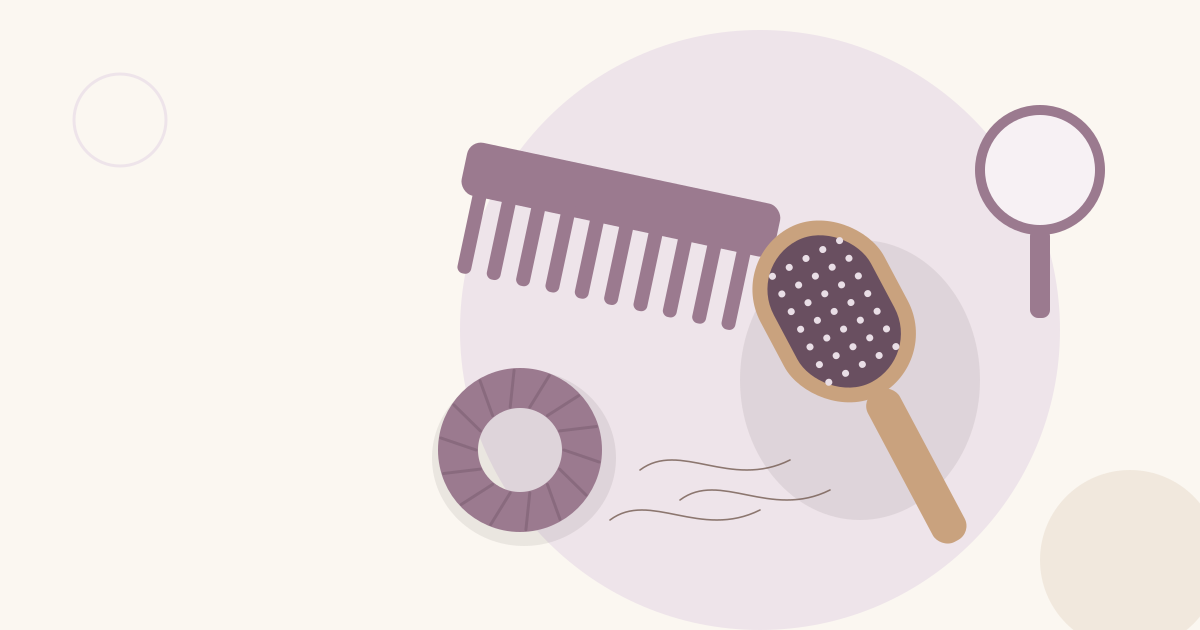
In short
How much hair loss is normal, why shedding often shows up months after a stressful event or having a baby, gentle hair-care habits, the truth about biotin, and when to see a doctor.
More hair than usual in your brush, the shower drain, or on your pillow can be upsetting. The reassuring part: much of the shedding women notice is temporary, and knowing the cause can make it far less scary.
How much hair loss is normal?
According to the American Academy of Dermatology, it's normal to shed about 50 to 100 hairs a day. You'll often notice more on wash days.
Shedding after a stressful event or having a baby
Many women notice heavy shedding two to three months after a big event, such as:
- Giving birth
- A high fever or illness
- Surgery
- A major emotional stress
- Rapid weight loss or a very restrictive diet
- Stopping certain medications, including some birth control
This type of shedding is called telogen effluvium. The event pushes more hairs than usual into a resting phase, and they fall out a few months later. The good news: it usually improves on its own within about 6 to 9 months once the cause has passed. After pregnancy, many women find their hair returns to its usual fullness by around their baby's first birthday.
Hair changes in perimenopause and beyond
During the menopause transition, some women notice gradual thinning, often a widening part or less volume on top. This is called female pattern hair loss. It's common, it tends to come on slowly, and early treatment often works best, so it's worth seeing a dermatologist if you notice it.
Other common causes
| Possible cause | What to know |
|---|---|
| Low iron | Common in women with heavy periods; a blood test can check |
| Thyroid problems | Often come with other symptoms like tiredness or weight changes |
| Tight hairstyles | Ponytails, braids, and extensions can pull hair out over time |
| PCOS | May come with irregular periods, acne, or extra facial hair |
| Medications | Some medicines list hair loss as a side effect |
| Patchy loss | Round, smooth patches can be a condition called alopecia areata |
Gentle hair-care habits
- Wear looser hairstyles and give your scalp breaks from tight styles
- Use a wide-tooth comb on wet hair and be gentle when detangling
- Turn down the heat on dryers and styling tools
- Eat regular, balanced meals with enough protein—very restrictive diets can trigger shedding (see our guide to iron-rich foods)
The truth about biotin
Biotin supplements are heavily marketed for hair, but there's little evidence they help unless you're truly deficient, which is rare. High doses of biotin can also interfere with some lab tests, including thyroid and heart tests, and lead to wrong results. If you take biotin, tell your doctor before any blood test.
When to see a doctor or dermatologist
Make an appointment if you notice:
- Hair coming out in clumps, or sudden heavy shedding with no clear cause
- Bald patches, a receding hairline, or a widening part
- Itching, burning, pain, redness, or scaling on your scalp
- Shedding that continues for more than 6 months
- Hair loss along with other symptoms, such as tiredness, feeling cold, weight changes, irregular periods, or new facial hair
A doctor can check for causes like low iron or thyroid problems, and a dermatologist can discuss treatment options. Please don't start treatments or supplements without guidance.
It's okay to feel upset
Hair changes can affect how you feel about yourself. If you're feeling low for more than a couple of weeks, please talk with your doctor. If you have thoughts of harming yourself, call or text 988 (U.S.) any time. In immediate danger, call 911.
Sources
We checked the information in this article against these sources:
- AAD. Hair loss: Who gets and causes
- AAD. Hair loss in new moms: Dermatologist tips
- U.S. Food and Drug Administration (FDA). Biotin Interference with Troponin Lab Tests
- 988 Suicide & Crisis Lifeline. 988lifeline.org
Ready to put this into practice?
Free gift · no purchase needed
The Moonleaf Gift Box
Printable self-care pages + 4 phone wallpapers. See what's inside
One gentle email at a time. Unsubscribe whenever you like.
The Moonleaf Bundle – Vol. 1–3 — $27
food, movement & perimenopause
Get Vol. IThe Moonleaf Bundle – Vol. 4–6 — $27
stress, gut health & glowing skin
Get Vol. II
Keep reading
 Skin & Hair
Hormonal Acne in Adult Women: Why It Happens and Gentle Ways to Care for Your Skin
Why breakouts can appear (or return) in your 20s, 30s, and 40s, a simple skin routine, over-the-counter options and their safety notes, and when to see a dermatologist.
 Stress
How to Calm Your Nervous System Quickly: 7 Gentle, Evidence-Based Ways
How to calm your nervous system quickly: 7 gentle, research-backed ways, from slow-exhale breathing to a short walk, plus honest limits and when to get support.